NBI Clearance For Foreigners In The Philippines
NBI Clearance for foreigners follows the same online registration as everyone else, but with real differences. You need your passport and ACR I Card instead of a Filipino ID.
First time applicants generally must go to the main office in Manila. Processing usually takes about a week to a few weeks, longer than what Filipino citizens experience.
What NBI Clearance For Foreigners Actually Is
This document checks whether your name matches anything in the Philippine National Bureau of Investigation’s own records. That is the honest scope of it.
It does not check your home country’s criminal history. It only reflects what exists inside Philippine systems.
Some people confuse this with a local police clearance. They are not the same thing.
A local police clearance comes from a city or municipal police office. NBI Clearance is a national level document.
Why Foreigners Need This Document
Three real situations explain most of the demand for NBI Clearance for foreigners. A student visa often requires it.
A 13a resident visa, granted to foreigners married to a Filipino citizen, commonly requires it too. A work visa frequently asks for it as well.
Beyond visas, some foreign governments or immigration systems want a Philippine background check specifically because you lived, worked, or studied here for a meaningful period.
Who Can Apply And The Six Month Question
You will sometimes hear that you must have lived in the Philippines for six months before you can even apply. One real applicant described this as a strict requirement they personally ran into.
Six months or more of residency is commonly what receiving authorities, like a foreign immigration office, want to see as proof of a meaningful stay. It is less clear that NBI itself blocks an application before that point.
If your situation is time sensitive, the safest move is asking your specific branch directly rather than assuming either version is universally true.
How To Apply As A Foreigner Living In The Philippines
Getting NBI Clearance for foreigners starts the same way it does for anyone else. Here is what changes along the way.
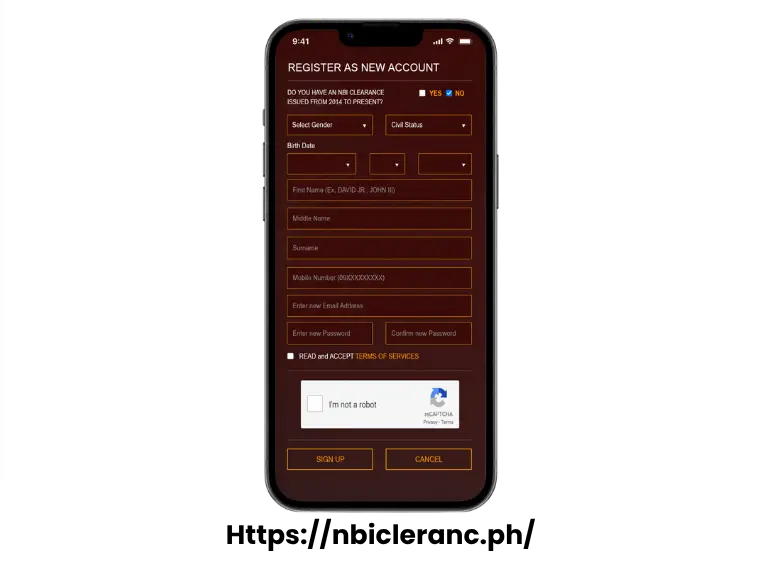
Register online
Create your account at the official NBI portal using an active email address.
Apply for clearance
Verify your passport and your ACR I Card, the Alien Certificate of Registration.
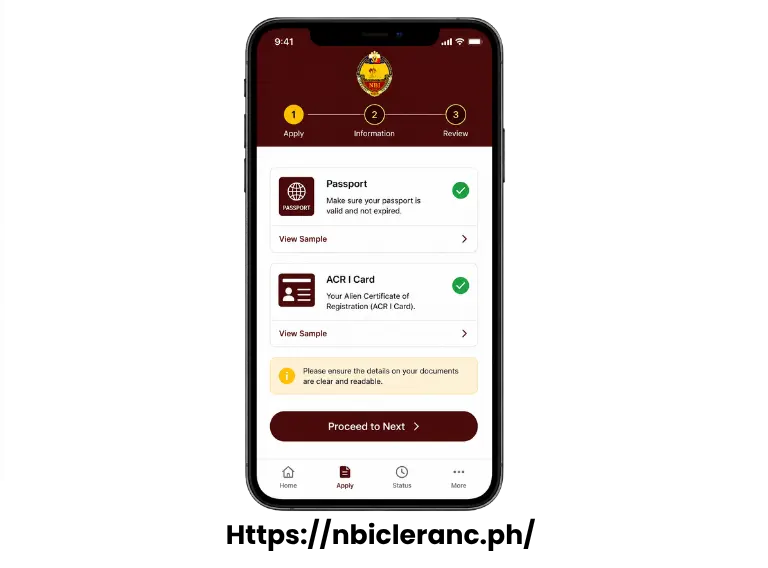
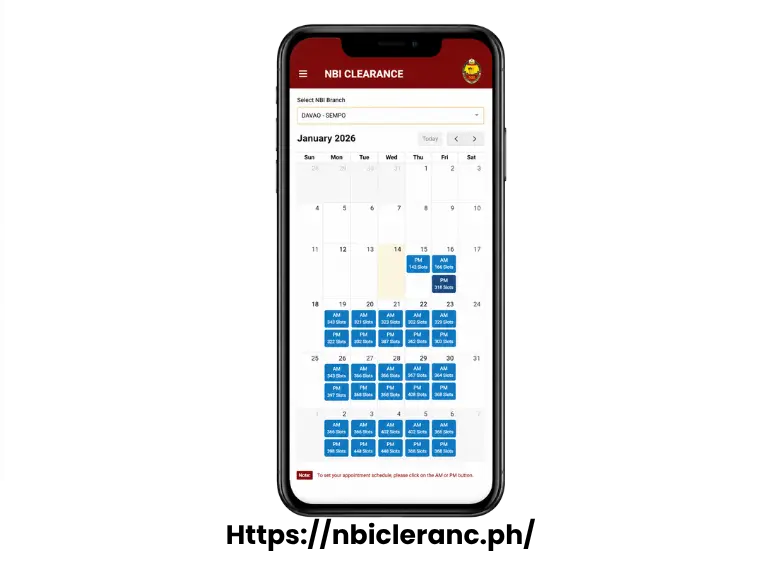
Schedule your appointment and pay
Metro Manila applicants use the main clearance center. Provincial applicants can generally book nearby.
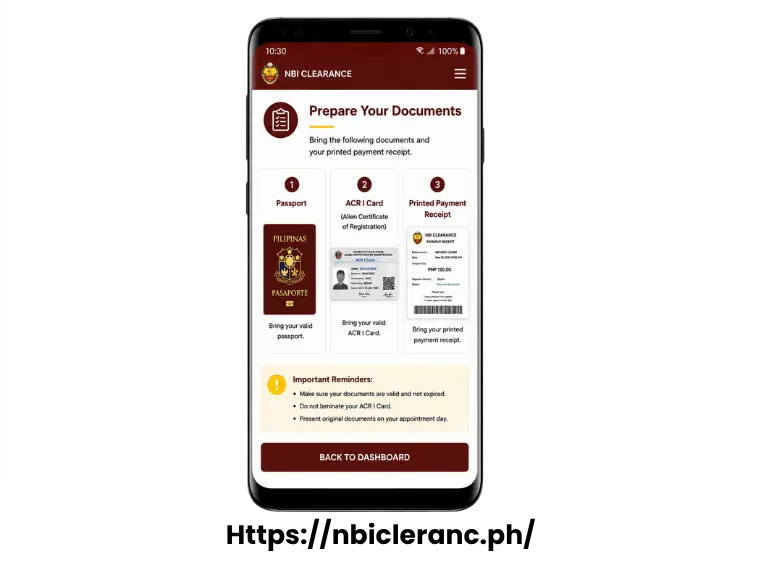
Prepare your documents
Bring your passport, ACR I Card, and printed payment receipt.
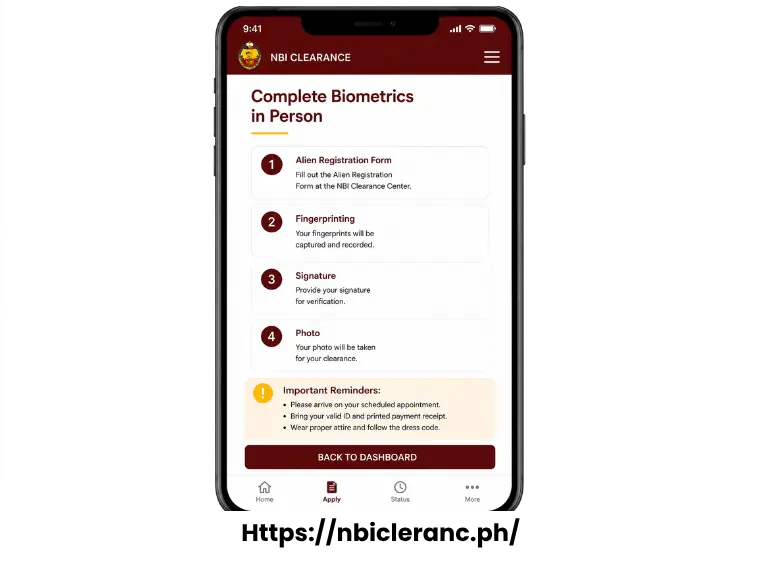
Complete biometrics in person
Fill out an Alien Registration Form, then fingerprinting, signature, and photo.
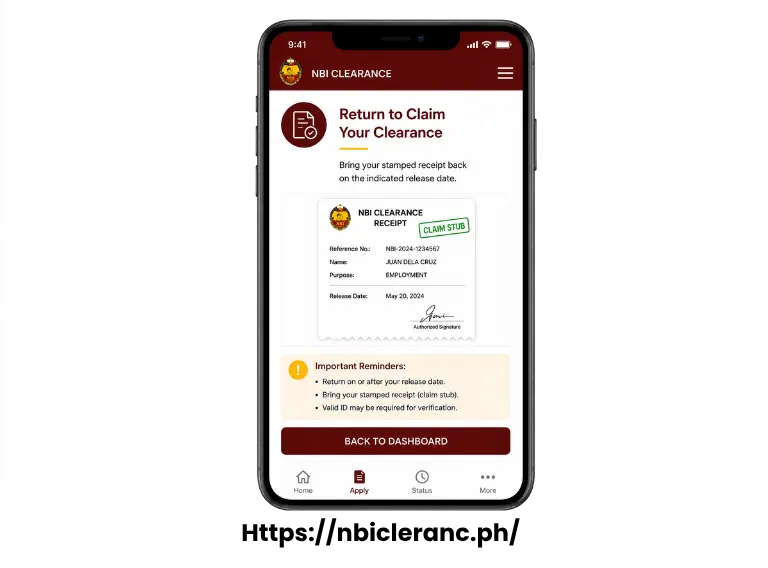
Return to claim your clearance
Bring your stamped receipt back on the indicated release date.
Requirements For NBI Clearance For Foreigners
Getting your documents right the first time saves you a wasted trip. Here is what actually matters.
Fees At A Glance
The most commonly cited total is 130 pesos plus a 25 peso service charge, coming to 155 pesos. Some sources mention a flat 150 pesos instead.
One source cites a separate 30 US dollar fee specifically for non resident foreigners, which may reflect a genuinely different category rather than a simple error. Confirm the exact amount at your specific branch before you pay.
NBI Clearance For Foreigners With No Acr Number
If you do not yet have an ACR I Card, this can complicate things, since it is one of the two primary documents NBI usually asks for. Bring whatever proof of legal stay you do have, and ask the branch directly what alternative they can accept in your specific situation.
Passport And Acr I Card
These two documents replace the usual Filipino ID list entirely. Bring both the original and a photocopy of each. For your passport, include the bio page and the page showing your most recent visa stamp.
The Middle Name Problem
Many foreigners do not have a middle name in the Philippine sense, and the online form was not really built with that in mind. Two real approaches have worked for different applicants.
Some simply write N A in the middle name field. Others combine their first and middle name together in the first name field, then leave the middle name field blank. Either approach is reasonable, so long as it stays consistent with your passport.
Why Your Real Address Matters
Use your actual residential address, not a PO box. This document connects to immigration record keeping, and a real applicant specifically learned this the hard way after using a mailing address instead.
Additional Documents For Students And Special Cases
Student applicants may need school records, a course syllabus, bank statements, and proof of financial support. Some categories also require a police clearance from your home country and a medical or quarantine certificate, along with a signed Personal History Statement.
Where Foreigners Can Actually Apply
Most guides state one firm rule about where NBI Clearance for foreigners gets processed. The reality on the ground is a little more layered.
The Manila Rule Most Guides Repeat
If you live in Metro Manila, your first time application generally must go through the main clearance office on UN Avenue in Manila. Multiple sources agree on this specific point.
What Real Applicants In The Provinces Experience
If you live outside Metro Manila, the picture changes. Real accounts from expats in Palawan, Tarlac, and Pampanga describe applying and completing biometrics at their own local branch. The application simply gets forwarded to Manila for backend processing.
Claiming often happens back at that same local branch too, not in Manila. In the Angeles and Mabalacat area of Pampanga specifically, foreign renewals are no longer processed at the old Robinsons NBI branch. They now go through the CDC One Stop Processing Center in Clark Freeport instead.
Applying From Overseas As A Foreigner
Some foreigners need NBI Clearance despite no longer being in the country at all. This usually applies if you lived, worked, or studied here before and a foreign authority now wants a Philippine background check.
This Works Differently From The In Person Process
Since you cannot appear for biometrics, the entire process becomes fingerprint card based instead. This card is commonly called NBI Form No 5 in consular practice.
Three Ways To Apply From Abroad
You can go through a Philippine Embassy or Consulate, which will help certify your fingerprints and forward your packet. You can submit directly to NBI in Manila by courier, handling payment and logistics yourself. Or you can authorize a trusted representative in the Philippines to submit, pay, and receive the clearance on your behalf.
For the mechanics of authorizing someone else to act on your behalf, see our complete guide on the NBI Clearance authorization letter.
What The Fingerprint Card Needs
Expect to provide your full name including any prior or maiden names, date and place of birth, citizenship, current address, and passport details. A licensed officer needs to take your prints and certify the card with their signature and seal.
If You Plan To Use The Clearance Abroad
Many receiving countries want this document apostilled or otherwise authenticated before they will accept it. This is typically a separate step handled after your clearance is actually issued.
How Long This Actually Takes
Real timelines genuinely vary here. Most sources describe somewhere between six working days and two to three weeks as typical for foreigners.
At least one real applicant reported getting everything done in about three days, so faster outcomes clearly do happen. The most common honest explanation for the longer wait is simple. Your background check runs through Manila regardless of where you applied, and this naturally takes more coordination than a local check.
This delay is not usually a sign anything is wrong with your specific application.
Common Issues And How To Avoid Delays
A few real problems come up repeatedly with NBI Clearance for foreigners specifically.
Smudged or incomplete fingerprints
This is a frequently mentioned cause of delay, especially for overseas applications using ink based prints. Bring wipes if you know you will be inked manually, since it does not come off skin easily.
A hit on your name
This does not mean you have a criminal record. It means your name needs a closer look before release. For the complete explanation, see our guide on NBI Clearance hit status.
Being shown first time jobseeker requirements by mistake
At least one real foreign applicant reported the online system displaying barangay certificate and jobseeker documents that clearly do not apply to a non citizen. If this happens to you, this is very likely a form selection issue rather than an actual requirement, so double check your registration category before proceeding.
Limited ability to edit your submitted information
Some real applicants have found they can only correct certain fields after submission, not everything. Double check every entry carefully before you submit.
Special Situations
A few less common scenarios around NBI Clearance for foreigners come up often enough to mention here.
You previously held an ACR I Card or long term visa. Keep copies of these, since they help confirm your identity is distinct from anyone else with a similar name.
You never lived in the Philippines but an agency still asks for this document anyway. This is uncommon. Confirm directly with that agency whether it is truly required in your specific case.
You have a known Philippine case or record. Your clearance may reflect this, and additional court documents could be required beyond the clearance itself.
Someone else needs to claim your clearance for you. This is generally possible with the correct authorization letter and identification, the same way it works for Filipino applicants. See our complete guide on authorization letters for the exact documents to prepare.
Nbi Clearance Renewal For Foreigners
Renewing NBI Clearance for foreigners generally needs your old clearance copy, your passport with its current visa page, both sides of your ACR I Card, your printed application form, and your receipt.
As covered above, where you actually process this can depend heavily on your specific location. It is worth confirming with your nearest branch rather than assuming Manila is your only option.
Important Reminders
Dress properly. Skirts, shorts, and slippers are generally not allowed inside NBI offices.
Bring two passport style photos just in case, even if some locations photograph you on site instead.
Keep a photocopy of your finished clearance somewhere safe, since you will likely need it again for a future renewal.
Validity commonly falls somewhere between six months and one year depending on its purpose, which is shorter than the standard one year period most Filipino applicants receive. Confirm the exact validity printed on your own copy once it is issued.
Frequently Asked Questions
Getting NBI Clearance for foreigners really is manageable once you know the two documents that replace your usual ID and accept that the wait is genuinely a little longer than what your Filipino friends experience. Bring your passport, your ACR I Card, and a little patience, and you will get through this without much trouble.