NBI Clearance HIT: What It Really Means and What to Do Next

Got a HIT on your NBI Clearance? Here is what it actually means, why it happens, how long it takes, and the exact steps to clear your name.
A HIT means your name or details matched something in the NBI database. It does not mean you have a criminal record. Most HITs come from having the same or a similar name as someone else in the system. You will usually be asked to come back after 5 to 10 working days for verification. Some cases take longer if a court needs to confirm records. Bring a valid ID and your receipt when you return.
Take a Breath First
If you are reading this because you just got a HIT and you are panicking a little, you are not alone. This happens to a lot of people, especially those with common Filipino surnames like Santos, Cruz, Garcia, Reyes, or dela Cruz. Even people with unique first names still get hits because of a common last name.
Many applicants who get a HIT have never committed anything, not even something small. They just happen to share a name with someone else who has a record. That is really what a HIT usually is. A name match, not a confession.
So take a breath. This is fixable. Let us walk through what is actually happening and what you need to do.
What a HIT Actually Means
When you apply for NBI Clearance, the system checks your name and personal details against a large database. That database includes records from courts, police stations, and other law enforcement offices all over the country.
A HIT simply means the system found something that looks similar to your name or your details. It could be an exact match, a close spelling, or even a name that sounds the same. The system flags it so a real person can check it manually before your clearance is released.
This is important. A HIT is a flag for a human to check, not a verdict. It does not mean:
- You have a criminal case
- You have a warrant
- You are blacklisted
- You will be denied a clearance
It just means someone needs to look closer before saying yes.
Why HITs Happen
There are really only two broad situations here, even though different guides describe it in different ways. Some break it down into many categories. We think it is easier to understand as two main paths.
The Name Is Not Actually You
This is by far the most common reason. Your name, or something close to it, belongs to someone else in the database. This can happen because of:
- A common first name and last name combination
- A missing or shortened middle name
- Small spelling differences
- A name that sounds similar even if it is spelled differently
Some applicants have reported that the system seems to check your first and last name first, and only looks closely at your middle name on a second pass. If your middle name is unusual but your first and last name are common, this may explain why you still got flagged even though your full name is not common at all. This detail comes from an applicant’s own observation rather than an official NBI explanation, but it lines up with how a lot of people describe their experience.
There Is an Actual Record Tied to Your Name
This is less common but does happen. It could be:
- A case that is still open or pending
- A case that was already dismissed or resolved but the system was never updated
- An old record from years ago that resurfaced
If this is the case, you will need documents from the court where the case happened to show it is settled, dismissed, or does not belong to you.
Different guides use different labels for these situations, like local versus national hits, or single versus multiple hits. We were not able to confirm that these specific labels come from NBI itself. What matters more than the label is which of the two paths above applies to you, since that decides what documents you need.
How Long Does It Actually Take
Most sources agree on a typical range of 5 to 10 working days. This matches what we found across several independent guides and even a mention from a government official discussing NBI service improvements.
That said, we want to be upfront that this is not a fixed number. It depends on things like:
- How busy your branch is
- How common the matched name is
- Whether the matched record is old or incomplete
- Whether a court needs to confirm something
Simple name match cases are often resolved within the typical window. Cases that need an actual court to confirm a dismissal or case status can take longer, sometimes several weeks, since courts do not always respond quickly. If your case involves this kind of coordination, be patient. There is no way to force a court to reply faster.
What to Do, Step by Step
Don’t Panic and Don’t Rebook
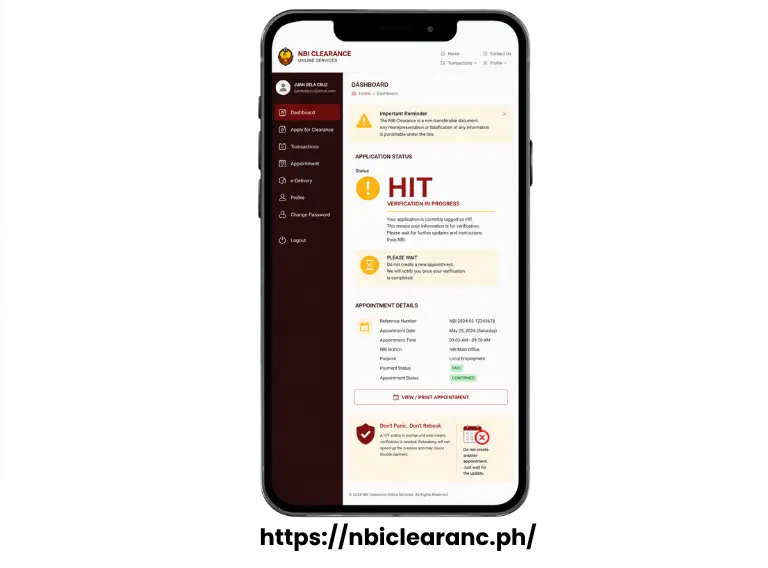
If you are told you have a HIT, do not walk away and try to book a completely new appointment somewhere else. Keep your existing reference number. This is your proof that you already started the process.
Read Your Hit Notice Carefully
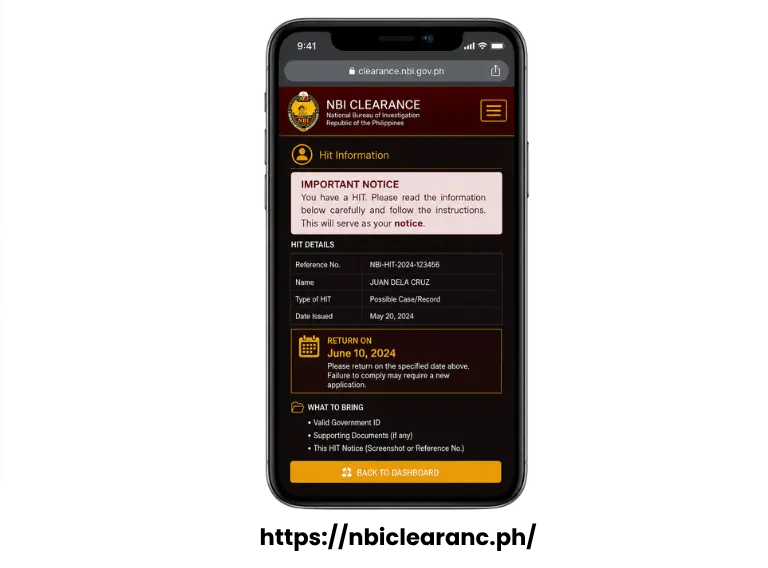
You should be given a notice or told directly what is needed and when to come back. Read this carefully. It usually includes a specific date to return.
Prepare Your Documents
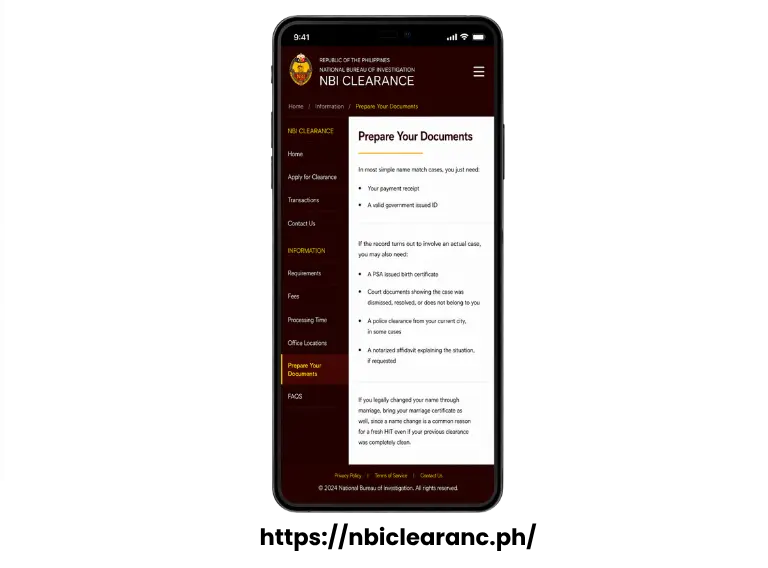
In most simple name match cases, you just need:
- Your payment receipt
- A valid government issued ID
If the record turns out to involve an actual case, you may also need:
- A PSA issued birth certificate
- Court documents showing the case was dismissed, resolved, or does not belong to you
- A police clearance from your current city, in some cases
- A notarized affidavit explaining the situation, if requested
If you legally changed your name through marriage, bring your marriage certificate as well, since a name change is a common reason for a fresh HIT even if your previous clearance was completely clean.
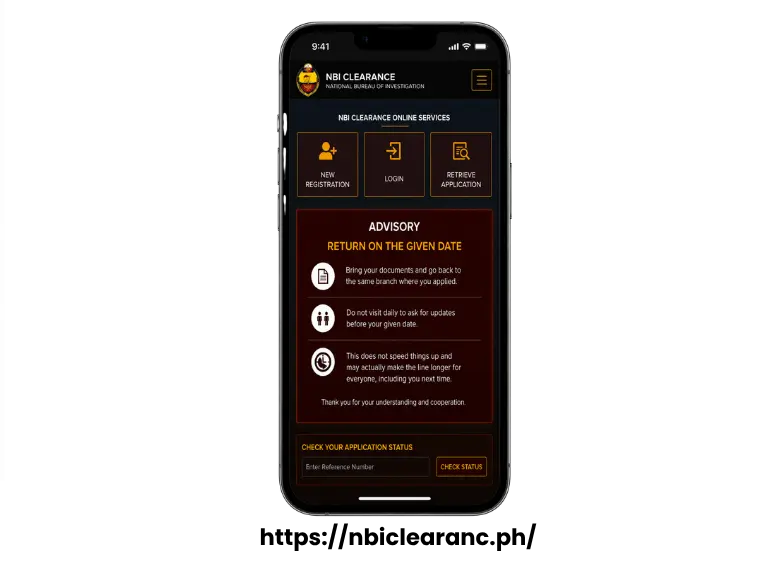
Return on the Given Date
Bring your documents and go back to the same branch where you applied. Do not visit daily to ask for updates before your given date. This does not speed things up and may actually make the line longer for everyone, including you next time.
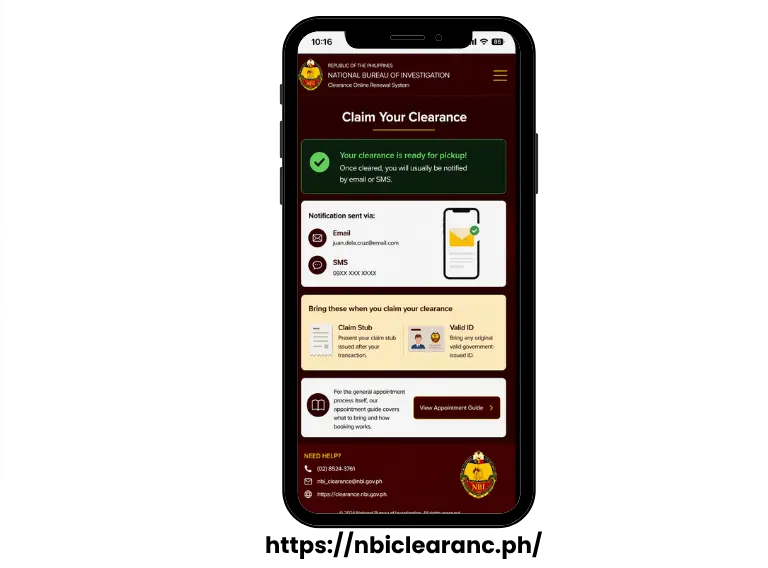
Claim Your Clearance
Once cleared, you will usually be notified by email or SMS. Bring your claim stub and valid ID to collect your clearance.
For the general appointment process itself, our appointment guide covers what to bring and how booking works.
Does a HIT Cost Extra
No. The fee stays the same whether you get a HIT or not. You already paid for the full process, including this verification step, when you paid your original fee. For the complete fee breakdown, see our fees guide.
Telling Your Employer or HR
If you need your clearance urgently for a new job and you get a HIT right before your start date, here is something genuinely reassuring. Based on real accounts from applicants who went through this, HR departments are generally used to this situation. Many companies allow new hires to start work and submit the clearance later once it clears.
If this happens to you, it is worth simply explaining the situation to HR directly. A HIT is an administrative delay, not proof of anything wrong. Any reasonable employer understands that NBI verification can take time and is not something you can control or rush.
About “No Derogatory Record” vs Other Wording
You may come across guides that say the exact wording printed on your clearance matters, specifically that “No Derogatory Record” is better than “No Criminal Record” or “No Record on File” if you plan to work or travel abroad someday.
One source describes this as an important distinction with real consequences for international use. Another describes a cleared HIT simply resulting in “No Record on File” as the normal, complete, successful outcome with no mention of any lesser status. Because these sources disagree, we do not want to tell you one version is definitely correct.
If you specifically plan to use your clearance abroad, the safest move is to ask the NBI staff directly at release time which exact wording is printed and whether it is sufficient for international use. This takes one minute to ask and removes any doubt.
What Happens If You Ignore a HIT
Some guides report that if you never submit the required documents or never return on your given date, your application can eventually be invalidated, meaning you would need to reapply and pay again from scratch. We were not able to independently confirm the exact number of days before this happens, but the safest approach is simple. Do not let a HIT notice sit unresolved. Return on your given date or as soon as you reasonably can.
A Word on Renewals
If you already had a clean NBI Clearance before and you suddenly get a HIT during renewal, this can feel confusing. It does happen, and it is not necessarily a sign that anything changed about you specifically.
The database grows over time. New entries get added constantly. A namesake of yours may have entered the system after your last clearance was issued. This means a completely clean history does not guarantee you will never see a HIT on a future renewal. If this happens, follow the same steps above. For the full renewal process, see our renewal guide.
Please Do Not Do This
Do not try to change the spelling of your name or drop your middle name to avoid a future HIT. This can create bigger problems later, since your details need to match your legal documents and IDs consistently.
Also, avoid anyone or any page online offering to make your HIT disappear for a fee, or promising a guaranteed no hit result. This is not how the process works, and paying someone for this puts your money and your personal information at risk.
Frequently Asked Questions
If you are dealing with a HIT right now, we know the waiting is genuinely stressful, especially with a deadline hanging over you. But in almost every case we found, this resolves into a normal, valid clearance once the verification is done. Bring your documents, follow your given date, and be patient with a process that, while slow, is mostly just trying to make sure the right name gets the right result.